

What does a "just world" look like – and how do young people learn to imagine it? For five days in September 2024, a pilot workshop invited students in grades 8 to 10 at Friedensburg High School to explore precisely this question. In the seminar "Just Justice – What is a Just World?", they developed their own social contracts, practiced changing perspectives, and translated their ideas into interactive virtual reality worlds.
A glimpse behind the veil of ignorance
The workshop was based on John Rawls' famous thought experiment "the original position and the veil of ignorance" from "A Theory of Justice" (1971). Under this imaginary veil, we do not know our origins, abilities, or needs—a prerequisite for negotiating fair rules for everyone. The seminar aimed to strengthen the participating young people's capacity for abstract thinking, empathy, and understanding of different life situations.
Discover values and rules through play
To kick things off, the young people explored their personal values in an interactive ship scenario: On an imaginary voyage, the participants didn't "throw overboard" values such as "fair treatment and non-discrimination," "freedom of expression," "freedom of religion," "democratic elections and rules," and "protection from abuse."
Following this, the game "The Concept of Freedom," developed in 2024 during the seminar "The Invention of the Future," encouraged reflection on shared rules, personal freedoms, and potential prohibitions.
The introduction to human rights issues was also presented in a playful manner. In the board and team game "Courage" by Amnesty International Germany, small groups worked on scenarios related to topics such as gender equality, environmental protection, anti-racism, and children's rights – sometimes using quizzes, sometimes creatively through audio recordings, videos, or drawings.

Bringing the thought experiment to life
Together, the young people reflected on categories such as identity, community, beliefs, talents, and possessions. In the "Lottery of Life," their category descriptions were randomly rearranged and supplemented with AI-generated fictional characters. The goal here was to learn about other people's perspectives through these collaboratively created personas and to try to empathize with their viewpoints, thereby stimulating storytelling and empathy development.
A discussion with Prof. Dr. Susan Neiman (Director) and Dominic Bonfiglio from the cooperation partner Einstein Forum Potsdam explored what philosophy means for our coexistence. In the debate game on freedom and equality, the teams haggled over arguments on human rights—a real warm-up for the core project: the "Spaceship Journey." Five teams negotiated social contracts for planets like "Gaia" or "Astris" on their way to unknown worlds, contracts that would guarantee participation, education, the economy, and culture for all walks of life.

Ideas become (VR) worlds
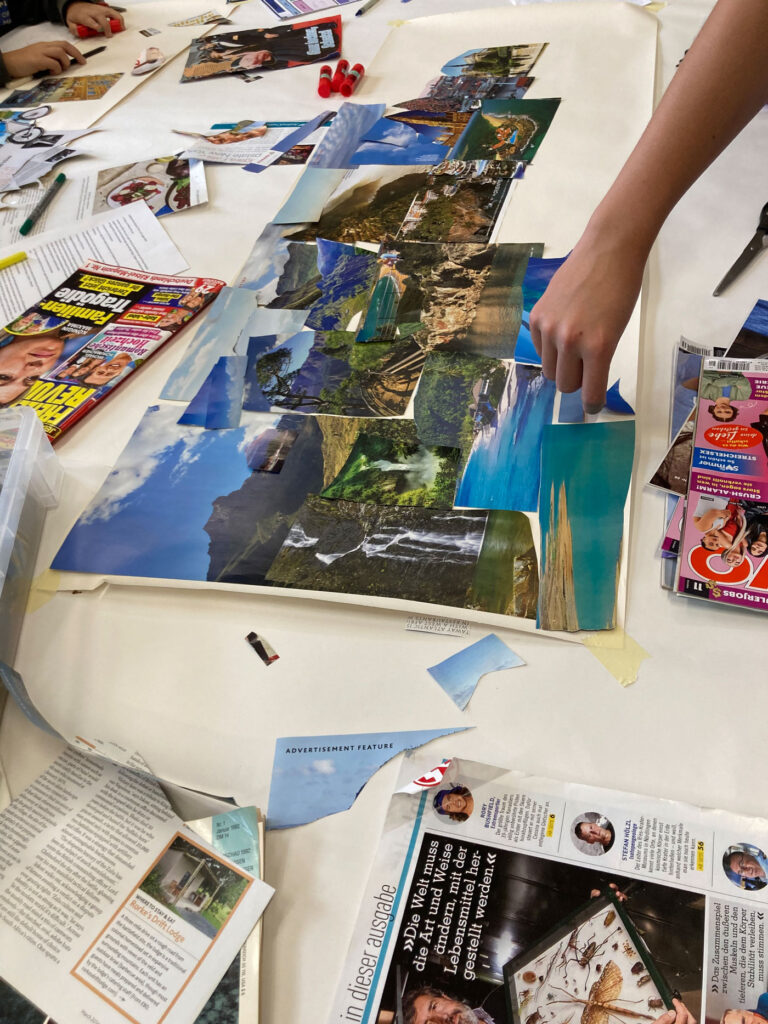
The resulting contracts were transformed into collages and used with 360-degree photos as templates for programming in the cospace program. Working in small groups, each team programmed their vision of a just world as a virtual 3D environment – an immersive experiment to make abstract principles tangible.

Presentation and reflection
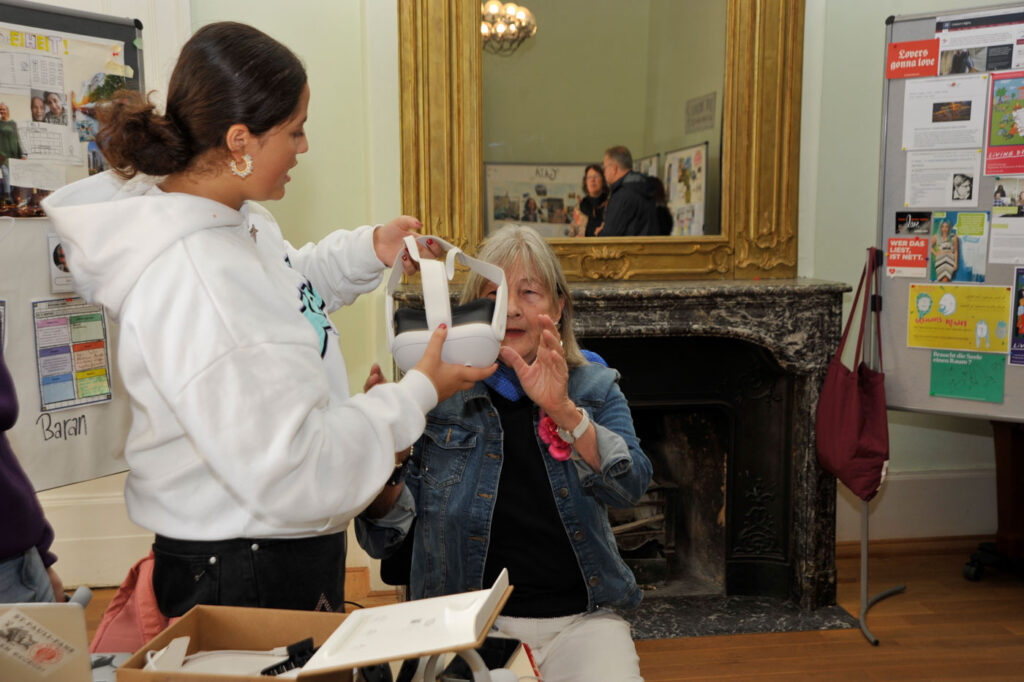
On the final day, the young people presented their VR worlds to invited guests. In discussions and feedback sessions, they reflected on their experience of negotiating justice under the veil of ignorance and on their insights for their own lives in everyday situations and society. The results were also showcased at the wannseeFORUM summer festival on September 28, 2024. Students told guests about the seminar, explained the materials they had created, and demonstrated the "worlds of justice" they had developed using VR headsets.

Best practices for political education
All seminar materials are available as Open Educational Resources (OER) and can be accessed free of charge at https://pad.medialepfade.net/s/oer_urzustand# . The collaboration between Friedensburg School Berlin, medialepfade.org, and the Einstein Forum Potsdam demonstrated that creative methods, playful approaches, and digital technology can make complex questions of justice tangible for young people – and provide impetus for political education work. The seminar offered a wide range of approaches, particularly for engaging with human rights. Young participants and instructors also had the opportunity to discuss human rights education with representatives of the Council of Europe's quality label for youth centers, who were meeting at the wannseeFORUM during the seminar week for certificate renewal. Through active participation in interactive, media-supported formats, young people gain a deeper understanding of human rights as the foundation for their future political participation.