



Everyone's talking about artificial intelligence, ChatGPT, and the like. But what's really behind it all, and how do we want to deal with AI? What do training data for artificial intelligence have to do with lived societal diversity? Can algorithms discriminate? Does social media promote racism, or does it create spaces to combat it in solidarity? What skills and knowledge do we need in a digitized society to be able to act responsibly and with awareness of prejudice in everyday life and at work? – These are many complex questions that we need to negotiate as a society. Only by grappling with them can digital political participation become possible.
In June, trainees at the Louise-Schroeder-School explored these and other aspects of digitalization in the seminar "Lifehack Digitalization – #howto Living Diversity in the Digitalized World." They researched, experimented with text- and image-generating AI, discussed the topics, and developed their own products – both analog and digital. Results from the four workshop groups – Analog Black and White Photography, Podcast, Documentary Photography/Poster Campaign , and Analog Game Development – offer insights into their work process .
Podcast/Audio Workshop
What exactly is ChatGPT? What dangers are associated with AI? How did the history of artificial intelligence unfold leading up to the development of ChatGPT, and what does the future of AI look like? Research findings, opinions, and insights into AI experiments are presented in the self-developed and produced
podcast "MeMo: Wannseen AI" – published on Audiyou.de. Enjoy listening! Link to the podcast "MeMo: Wannseen AI" on Audiyou.de
You are currently viewing placeholder content from the standard version. To access the actual content, click the button below. Please note that this will involve sharing data with third parties.
Further information(Please note that clicking on the following images and links Flickr.com will transmit the wannseeFORUM privacy policy.)
For their podcast cover image, the participants generated pictures using AI, which can be seen in an album published on Flickr.
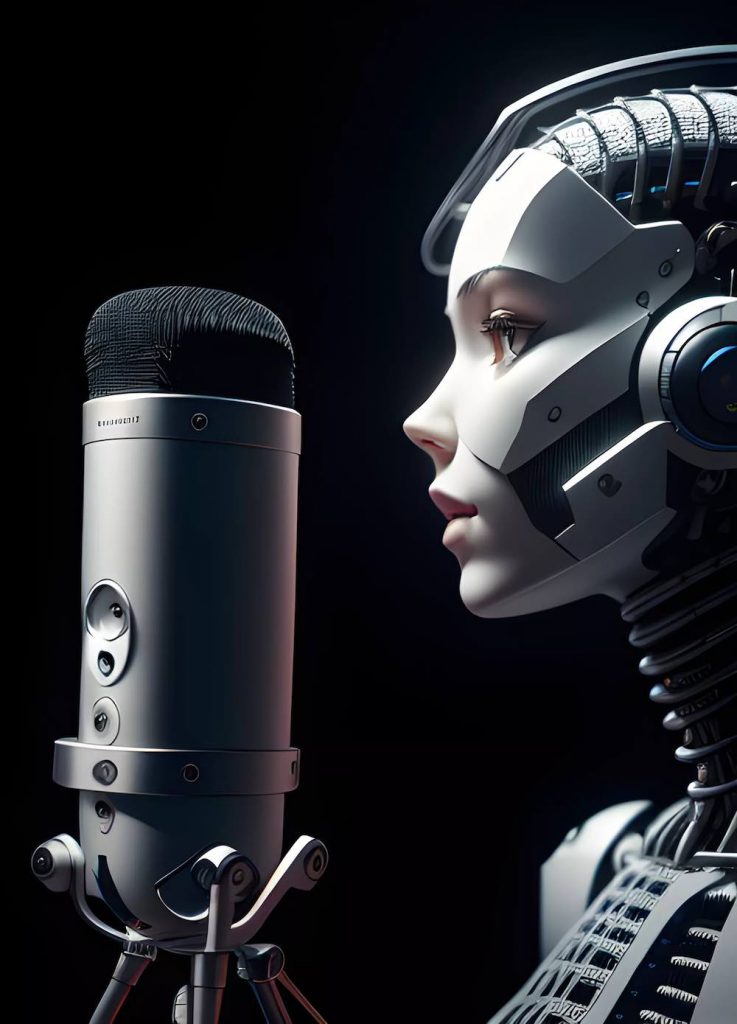
used :
Statistics on the use of AI in everyday life in Germany, 2020 https://de.statista.com/statistik/daten/studie/1176437/umfrage/nutzung-von-kuenstlicher-intelligenz-in-deutschland-im-alltag/:
Further sources:
- ChatGPT (2023): Wikipedia authors, [online] https://de.wikipedia.org/wiki/ChatGPT [accessed on 20.06.2023].
- Robert Bosch GmbH (2018): History of Artificial Intelligence, Bosch Global, [online] https://www.bosch.com/de/stories/geschichte-der-kuenstlichen-intelligenz/ [accessed on 20.06.2023].
- Arndt, Christian (2023): How Artificial Intelligence (AI) is changing our future, WIEMER /ARNDT, [online] https://wiemer-arndt.de/wie-kuenstliche-intelligenz-unsere-zukunft-veraendert/ [accessed on 20.06.2023].
- Federal Agency for Civic Education (n.d.): Timeline of artificial intelligence: A journey through the history of machine thinking, bpb.de, [online] https://www.bpb.de/fsd/h5p/zeitstrahl-ki/ [accessed on 20.06.2023].
Workshop group
Analog black and white photography
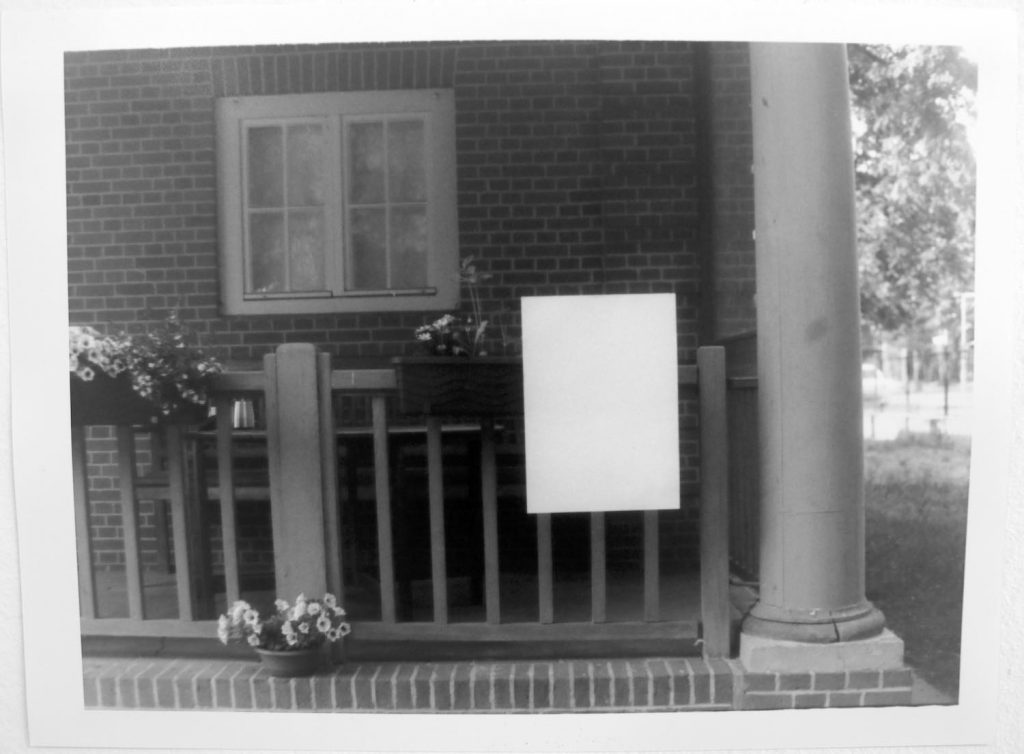
Photography from the photo series “World Collector”
Our understanding of the world and the formation of opinions are strongly influenced by the perception of images. Companies like Open.ai, for example, have developed bots with their Midjourney service that generate images based on textual specifications. Do algorithms thus change how we perceive and interpret image content and our relationship to images as a form of documentation? Do they reproduce and reinforce prejudices? What images could encourage us to consciously reflect on our handling of prejudices and to invite others to engage with us, rather than assigning values to people and groups, and to see diversity as a celebration of differences and commonalities?
In the workshop, participants use their own analog image production to explore questions about the construction of reality through photographs by artificial and human intelligence.
They developed photographic series and presented them in a self-conceived and implemented exhibition.
Excerpts from the photographed exhibition can be seen here (pdf).
Analog Game Development
What role play in self-determination and fundamental democratic values in everyday life, the professional world, and social interaction? Participants in this workshop playfully explored different perspectives on the opportunities, fears, and dangers of AI: What tasks does AI take on? How is it trained so that human errors—such as lying or prejudice—and anti-democratic values are not reproduced and reinforced? Using AI that generates text and, in particular, images, they developed and produced their own games, which they were able to try out at the final presentation. Some of the game materials are published here:
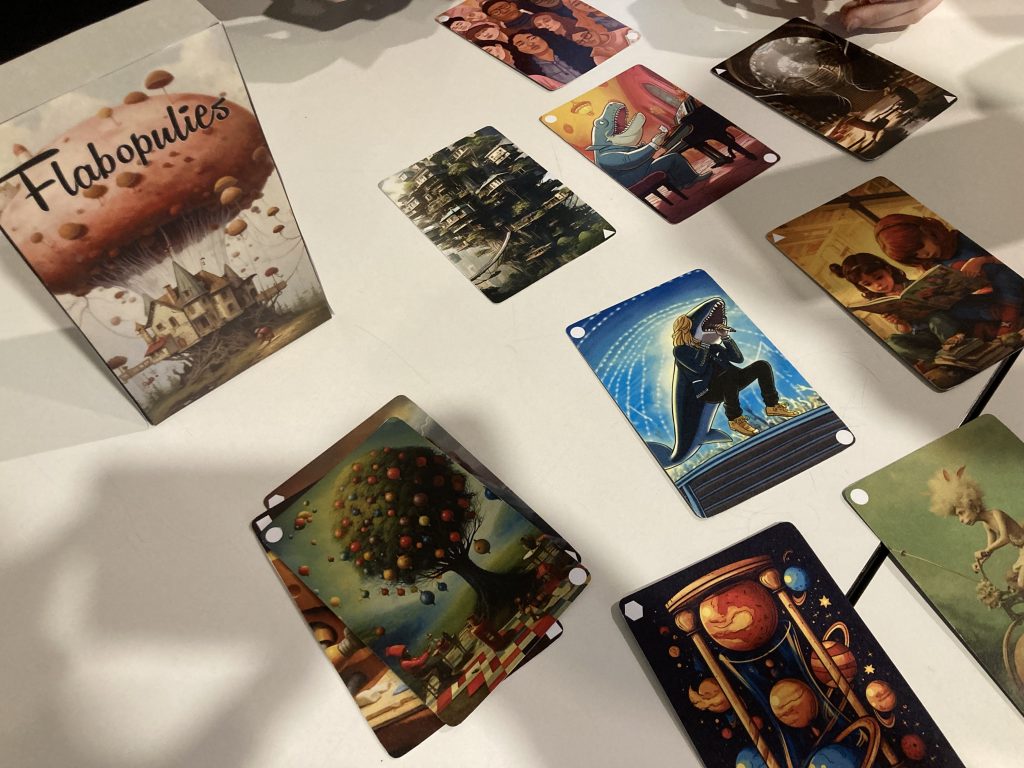
"Flabopulies": Lie or truth? Decide for yourself (PDF game materials)
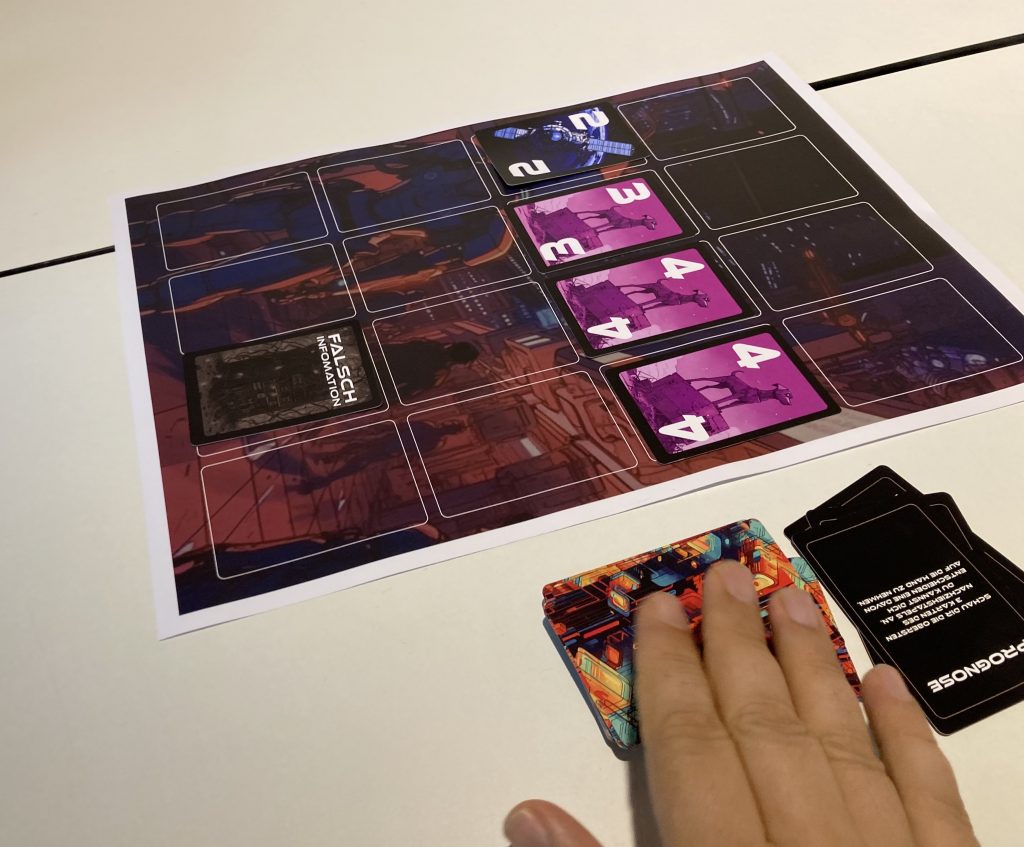
"Neural Nexus" takes you into the exciting world of artificial intelligence!
You all share the same goal: to become the best AI. Information and data are exchanged, stolen, and negotiated. But beware – a human is trying to harm you. Your mission: Feed the server with information
(PDF gameinstructions)
Documentary photography/poster campaign
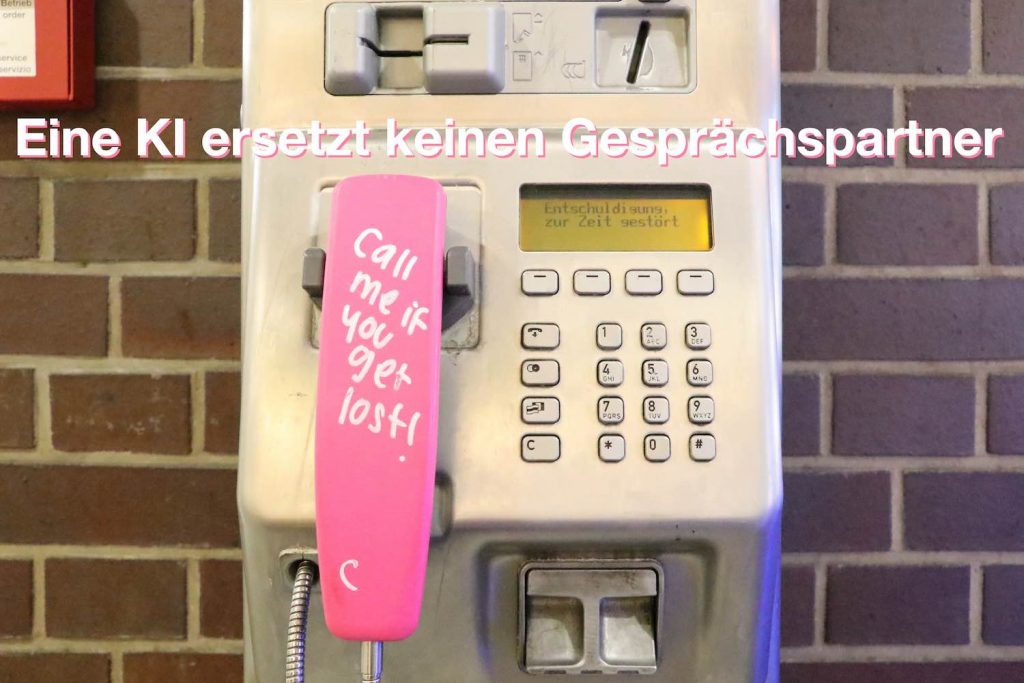
A few days before the seminar began, the European Parliament debated the Artificial Intelligence (AI) Act, the most comprehensive regulation of artificial intelligence worldwide to date. The extent to which AI pursues capitalist power and profit interests, or public-interest-oriented societal goals, and the way it will ultimately act depends heavily on the future legal framework for its creators. The initially "voluntary code of conduct" must also address issues related to the promotion and reproduction of structural discrimination. This includes the visual language of the media. How are racism, prejudice, and bias disseminated or combated when image-producing AI draws from existing digital sources? What linguistic stances in prompts generate which images? How can one's own position on AI in a diversity-oriented society be shaped through photography (and perhaps even co-determined by publishing it as a source of imagery for AI)?
The workshop participants experiment with their own visual concepts as well as with AI services.
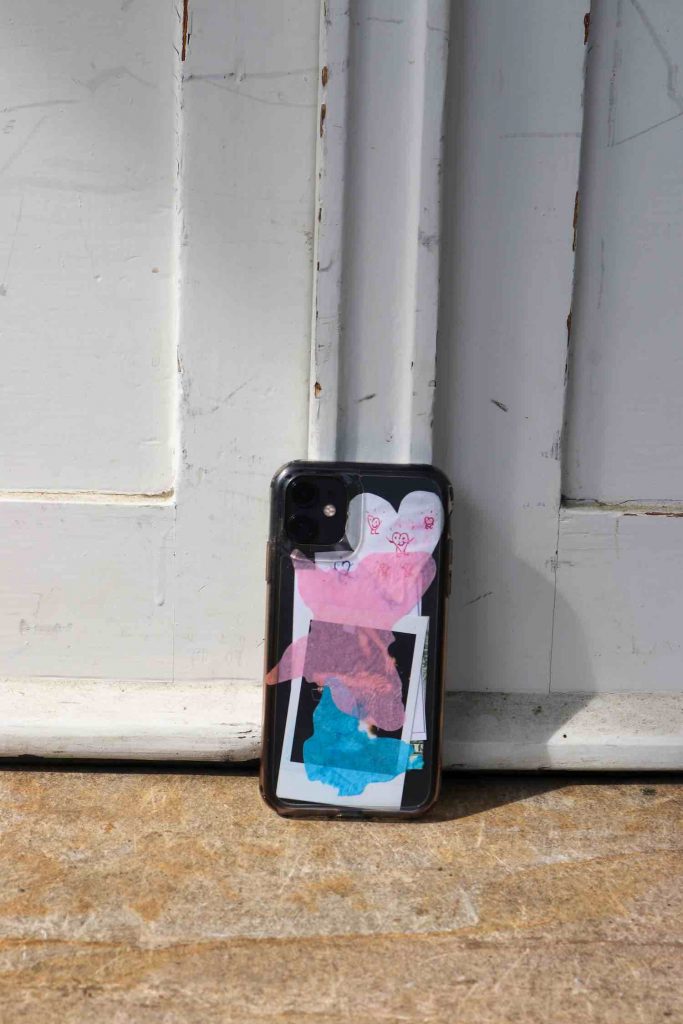
"Something You can't live without"
In the exercise “Promptroulette”, an AI randomly generated terms, for which participants then photographed their image ideas – with an exciting comparison to the results of an image-generating AI.
For documentary photo series, they explored the urban space of Berlin to see where and how digitization/AI is already defining/changing spaces.

Documentary series
- Photo series by Isabella Langbein and Charlotte Spranger
- Photo series by Anna and another participant
- Photographic series/photography project by Hannah Lawen and Marie Nguyen
- Photo series by Piet Sykora and Tom Eichberg
Impressionsfrom the seminar on Flickr
The seminar was funded by the Senate Department for Education, Youth and Family.
It took within the framework of the "Political Youth Education in the AdB" within the "Social Issues and Political Participation" , funded by the Federal Ministry for Family Affairs, Senior Citizens, Women and Youth.
The wannseeFORUM Foundation is an accredited provider of programs by the Federal Agency for Civic Education.
Cover image: created with AI by the podcast workshop group