


With the nationwide Pentecost Academy for Youth Participation, we enable young people in Berlin to exchange ideas about youth participation, discuss topics with one another, and further their education, so that they can then advocate for strengthening democracy in their respective communities. In 2017, under the motto "We are the Alternatives," focused on the various political orientations in times of crisis.
The world seems to be falling apart. There is much talk of an impending epochal upheaval, but it remains unclear where this journey is headed. This makes it difficult to maintain an overview and determine the direction of political engagement. Where can we begin? Who or what is preventing us from living together justly and peacefully? What should we protest against – and with what goals? These were all questions raised by the 17th Pentecost Academy to discuss youth participation in a time when the rise of right-wing movements is introducing a completely new dynamic into the debate surrounding political participation. Against this backdrop, we wanted to gain an understanding of the current situation, examine political phenomena such as right-wing extremism and right-wing populism more closely, and discuss their causes, counter-strategies, and alternatives. This included, firstly, an analysis of the multiple crises accompanying the rise of right-wing movements; secondly, a critique of the alternatives put forward by the right; and thirdly, the search for alternative paths beyond discrimination, exclusion, and group-based hostility.
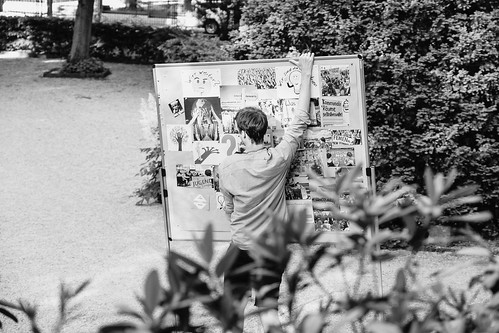
Friday was primarily dedicated to arrival and getting to know one another. There was a large icebreaker bingo game, as well as a prepared speed-dating session with questions about personality, expectations, and political topics. Participants interviewed each other and wrote down the answers on slips of paper, which were then posted on prepared display boards. This gave everyone an initial overview of the participants, their expectations, and their political views/experience. In addition, all of the Pentecost Academy's cooperation partners had the opportunity to briefly introduce themselves and their own projects.
Saturday's theme day addressed the questions raised in the title: "We are the Alternatives – Political Orientations in Times of Crisis." In his opening lecture, journalist Rico Grimm addressed current crises, from the financial crisis to the Euro crisis and the refugee crisis, that suggest we are indeed in times of crisis. His thesis, however, was that it is not the scale of the crises themselves that has changed, but rather our perception of them: Digital communication has radically transformed the way we exchange information. We no longer communicate hierarchically from the top down, but are all suddenly part of a network that knows no rulers, only large and small nodes. As a consequence, we no longer have a grand narrative that makes sense and provides orientation in this incredibly fast-changing world. Therefore, we are currently witnessing numerous attempts by various movements and initiatives to develop new narratives. If all goes well, Rico Grimm concluded his lecture, then we too can open such a laboratory today, on this fantastic lake.
His theses led to an intensive discussion during and after the lecture, which was taken up and continued in the three subsequent topic groups in order to develop theses for the following assembly.
1) “Crazy Times”
In Workshop 1, various crises were examined and analyzed individually. Questions were raised about their causes and effects, and it was critically questioned whether this situation could even be described as a crisis. The discussion also focused on who is affected by which crisis and who can benefit from it. When asked which were the five biggest crises of recent years, the group ultimately agreed on the financial crisis, the refugee crisis, the energy/climate crisis, the post-reunification era/identity crisis, and the surveillance crisis. Guiding questions in the resulting five small groups were: What is the actual conflict? Who is truly affected, and who is being talked about? Who benefits, and what is the political response? Among other things, it was noted that the discourse surrounding the “refugee crisis” is already driven by vested interests. Finally, these individual phenomena were related to one another, and questions about their connections were raised: What do all these crises have in common? What concrete steps can one take? Which crisis would you prioritize if you were part of the government? The discussions resulted in the development of theses for the assembly.
2) “The people are confused”
What exactly is meant when we talk about right-wing populism? In Workshop 2, the terms “right-wing – left-wing – populism – extremism” were first clarified using various texts. It was very helpful for all workshop participants to discuss these words and learn where their meanings overlap and how they differ. The group then explicitly addressed the rise of right-wing populism, examining both the goals and the mechanisms of right-wing populist ideology. What worldview do right-wing populists represent, and what role do racism and nationalism play? Furthermore, possible (counter-)strategies for dealing with right-wing ideology were discussed. Finally, theses were formulated for the assembly: The supporters of these parties will not simply disappear if we wait and see. Therefore, our society should not exclude people with right-wing views, so as not to reinforce their outsider status. Values must once again take center stage and promote cohesion within society.
3) “Continuing the Confusion”
Workshop 3 focused on political alternatives and options for societal learning processes: Where do progressive movements and alternatives already exist? What visions of the future do these movements have for Europe and the world? What factors repeatedly drive the growth and failure of young political alternatives? What alternatives and options would we like to see emerge, help develop, and even help shape?
Participants discussed what currently bothers them most and what projects and ideas they intend to use to address these problems or raise awareness of them. As an introduction, examples of youth movements from various countries were presented. These movements couldn't be more different, yet all shared one common thread: they were driven and supported by music. The discussion then turned to concrete alternatives to the problems mentioned at the beginning of the workshop, which had been collected at the start. This led to some very creative ideas: from a cultural exchange through a shared meal of culinary specialties brought by all students of a primary school, to a provocative simulation of the German Bundestag by young people, to a performance by women – there was a wide range of suggestions. Many young people complained about problems in this workshop, but they also found suitable alternative forms of protest, which they took with them to the assembly as examples.
In the subsequent assembly, participants of the Pentecost Academy had the opportunity to discuss questions and theses that had arisen in the workshops with invited guests from politics and civil society. This discussion format, which was developed in the wake of the protest movement in Spain's public squares, is characterized by the fact that it allows for non-hierarchical communication in large groups. All participants in the assembly have an equal right to speak. Speeches are given one after the other. During a speech, emotions such as agreement, disagreement, or the desire for a direct response to the previous speaker can be signaled using various hand gestures.
The plan was for a sequential discussion of the three topics covered in the workshops. During the discussion, it became clear that many young people expect more political participation and often feel overlooked. The politicians present, in turn, criticized the young people (not the participants) for their lack of engagement and called for them to become more involved. The organizers and moderators deliberately refrained from steering the discussion too strongly in order to do justice to the Asamblea format. However, it became apparent that this meant not all three topics could be addressed as planned. Nevertheless, exploring the relationship between young people and politics seemed to be the primary interest of those present.
To foster exchange among participants and encourage their own ideas, a Barcamp was held on Sunday. First, there was a brief introduction to the Barcamp method, followed by a collaborative session planning session with the Pentecost Academy team. Thanks to the active participation and strong interest of the young people, the day was also a success.
The sessions offered included:
“Political Framing”
, “Work of Trade Unions”
, “Left-wing Populism – Opportunities and Risks”,
“How to Understand Conspiracy Theories”,
“Internet Culture”
, etc.
Some of the Asamblea's insights also influenced the Barcamp day on Sunday – a good example being the Barcamp session on "Political Framing": For political discussions, which by definition deal with complex topics, frames represent a structural order that incorporates some ideas more strongly than others. This means that our political debates about what is right for us as a community are shaped by diverse linguistic frameworks of interpretation. Often unconsciously, we evoke images and associations that steer us in a particular direction. For example, when we speak of a "wave of refugees," we bring into the context of a natural disaster, which appears threatening and at the same time external and not man-made. Terms like "tax burden" or "minimum wage" carry a similar number of frames. For the participants, it was clear: Critically examining their own everyday language can only be the first step. Structurally examining what the language surrounding us does to us, what it triggers in us, is an ongoing challenge that cannot be tackled alone; rather, it requires the development of a shared awareness. Taking time as a group to explore such a topic, which isn't necessarily cool or catchy, and helping each other sharpen our linguistic senses, was both the conclusion and the future goal for all participants of this Barcamp session.
To prepare participants for their continued involvement in their respective contexts, a methods day was held on Monday, during which the young people were able to learn methods and skills for their future political work in various working groups.
The following were offered:
“Project Management”
“Creative Protest Methods”
“Argumentation Training Against the Right”
“Graphic Recording”
“Public Relations”
“Forum Theatre”
Throughout the academy, some participants worked in the "Online Documentation" methods group, creating articles, podcasts and videos for the Pentecost Academy blog
The "Forum Theatre" methods group staged a play, which they performed on Monday evening in the Theatersaal . The scene, which dealt with the oppression and sexualization of women in our society, sparked a lively debate among the participants about gender roles. After the facilitator refused to allow a male participant to take on the role of the female victim of sexual violence, it was criticized that this would reinforce stereotypes about men and women. Others argued that violence is primarily perpetrated by men and that this fact could be overlooked by dissolving the categories of man and woman.
On the final day, the agenda included a review of the past few days and an evaluation. Results from each workshop were presented to give all participants an overview of the work done in the individual groups. The "Online Documentation" methods group also presented some highlights from their documentary work.
The evaluation forms and personal conversations revealed that the participants were very satisfied with the three elements of political discussion, exchange, and further training throughout the event and gained valuable insights for their own political engagement. The positive feedback from the participants reinforces our belief that the Pentecost Academy is a successful format for strengthening youth participation and helps us in planning future events in this area.
Many thanks to everyone involved and we are already looking forward to the Pentecost Academy 2018 with you!!!