


“Memory Walk” Berlin 2017: A Retrospective
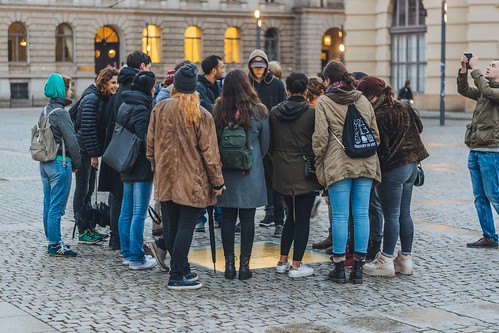
At the end of October, 15 young people from the Netherlands, Slovenia, and Germany explored the themes of commemoration and remembrance, as well as discrimination in the past and present, at the wannseeFORUM. The focus of the international film seminar "Memory Walk" was memorial sites in Berlin – places that call for remembrance: Why do we need these places – and do we even need them at all? What stories and debates lie hidden behind monuments? What significance do these memorial sites hold for people today? And how can remembering human rights violations and discrimination in the past help us to show civic courage in our present and to stand up for a just society?
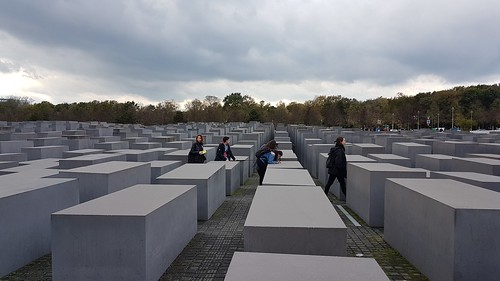
"Memory Walk" is an educational program on the topic of remembrance and commemoration that has been run by the Anne Frank House in Amsterdam for several years in collaboration with various international partners around the world and is continuously being developed. This year, wannseeFORUM became a partner for the first time, together with the National Museum of Contemporary History in Ljubljana, Slovenia. The program focuses on the intensive engagement of participating young people with memorial sites and their significance in the past, present, and future. This is achieved through encounters with various monuments on site, in-depth research, and the production of their own short films about the respective locations.
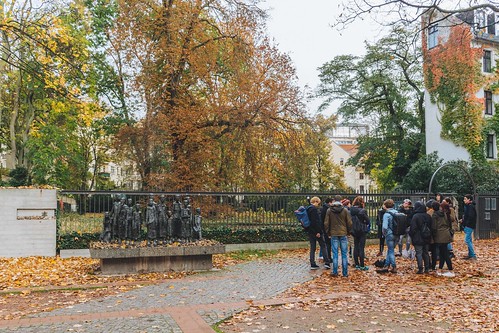
In Berlin, the actual "Memory Walk" on the second day of the seminar comprised nine very different monuments dedicated to commemorating the crimes of National Socialism – monuments that focus on various victim groups (Jews, Sinti and Roma, homosexuals, those persecuted as "asocials," people with disabilities or mental illnesses as victims of the "T4" program) as well as commemorating specific events, such as the book burning of May 1933 or the Rosenstrasse protests of 1943, the latter being one of the few successful acts of civil disobedience during the Nazi era. The monuments repeatedly served as a basis for discussion, prompting questions about their relevance to our present day, whether we can learn from history, and to what extent remembering human rights violations and discrimination in the past can inspire us to work towards a more just society in the present.
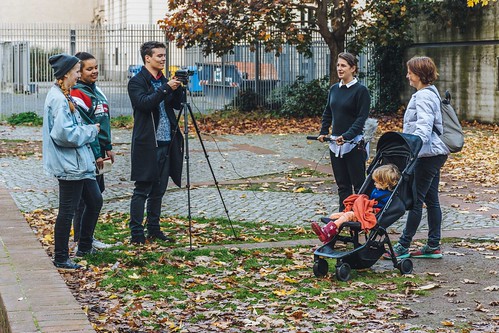
A few days later, the participants confronted passersby with these same questions while producing their own short films about self-selected monuments along the "Memory Walk" ( Große Hamburger Straße, the Memorial to the Murdered Jews of Europe , and the Memorial to Homosexuals Persecuted under National Socialism). The resulting sound bites, or "vox pops," reflect a broad spectrum of attitudes and opinions on the meaning of and how to deal with monuments in our time. The topicality of these questions was addressed, among others, by a visitor to the Memorial to the Murdered Jews of Europe, who pointed out that just a few hundred meters away the day before, the inaugural session of the new Bundestag had taken place, in which—for the first time—right-wing extremists are represented in the ranks of the AfD parliamentary group.
The six-day seminar repeatedly highlighted how relevant history can be and how politically controversial its treatment can be. Through film, the participating young people were able to explore "their" monuments and develop their own interpretations. The resulting films will be published here soon after post-production is complete. The project and the collaboration between the three participating institutions will continue next year with two further "Memory Walk" seminars in the partner cities of Amsterdam and Ljubljana. We are already looking forward to the encounters and the results.
Seminar impressions on Flickr (Photos: Jure Stušek/Aaron Peterer):
You are currently viewing placeholder content from the standard version. To access the actual content, click the button below. Please note that this will involve sharing data with third parties.
We thank the German Student Scholarship of the Roland Berger Foundation and the Anne Frank Center for their support in recruiting participants.


This project is funded by the EUROPEANS FOR PEACE program of the Foundation "Remembrance, Responsibility and Future" (EVZ).
This publication does not represent the opinion of the EVZ Foundation. The author is responsible for the content.

The meeting in Berlin is also supported by the Berlin Senate Department for Education, Youth and Family.
