Student mentor seminars 2016: a review:
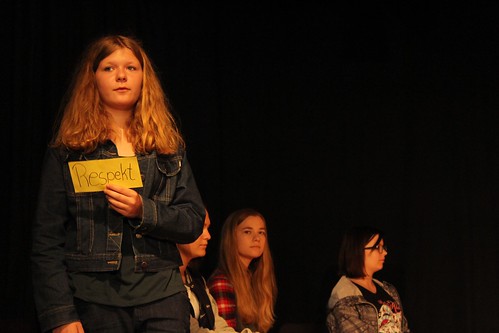
Respect. Violence. Justice. Discrimination. Trust… These are all issues that young people in Berlin schools face daily, and just some of the topics addressed in this year's training seminars for prospective and current student mentors at the wannseeFORUM – and once again, there were many challenging issues to tackle. For six years, the wannseeFORUM has regularly offered five-day training seminars for student mentors, buddies, or team leaders – students who take on mentorship and responsibility for the new seventh graders at their schools. The aim of the program is to prepare prospective mentors for their responsible role and to provide current and more experienced participants with new methods and ideas for their involvement in schools. The interaction of students from different age groups, school types, and districts is an integral part of the concept, as it also aims to prepare participants for working with heterogeneous and diverse groups – the norm in Berlin schools.
Around 120 students from nine schools across Berlin – from Dahlem to Buch, from Hohenschönhausen to Kreuzberg – participated in the three student mentor seminars at the wannseeFORUM this year. They brought with them pressing questions and problems from their daily lives as mentors and student representatives: What does respect actually mean – how do I earn it when standing in front of a group, but also: how do I extend it to others? And who actually deserves respect, and why? Speaking and listening were recurring themes; good communication skills need to be learned, especially when, like the student mentors, you fulfill an important social function within the school system. And it was precisely this social function and the associated role in everyday school life that the participants examined during the intensive workshops: When do the mentors or buddies risk becoming a "buffer" for social tensions at the school?
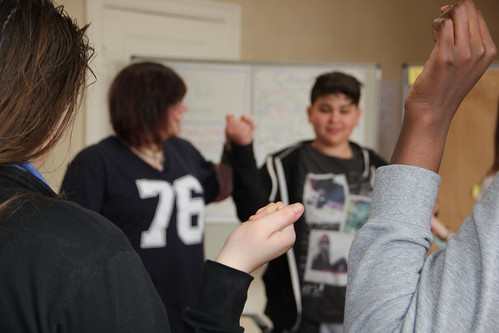
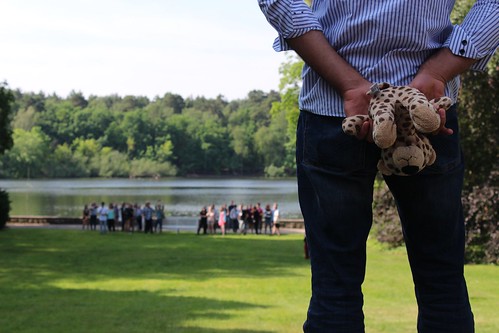
At the top of the list of topics and needs this year, as well as the perennial question of how to reconcile the sometimes differing needs of individuals and groups: Does democracy (at school and beyond) mean "the loudest majority prevails"? Or can the quieter voices also be brought on board? These topics were explored in a very practical way, not only during the day in the various small groups, but also during self-organized free time, for example, during joint activities and group games in the garden and on the lake shore, sometimes in sweltering summer temperatures. The five intensive days spent together at Pohlesee forged strong bonds between the participating school groups, new friendships were formed, and in the end, there were tears of farewell. It's fortunate that all participants live in Berlin; reciprocal school visits were firmly agreed upon. Based on the experiences of this year's seminars, it can be confidently assumed that the positive momentum from the wannseeFORUM will strengthen the student mentors for their responsible task after the summer holidays when they welcome the new seventh graders.
Photo impressions from the seminars:
February 29 to March 4, 2016: Seminar with students from the Carl-Friedrich-von-Siemens-Gymnasium and the Ferdinand-Freiligrath-Schule
You are currently viewing placeholder content from the standard version. To access the actual content, click the button below. Please note that this will involve sharing data with third parties.
May 30 to June 3, 2016: Seminar with students from the Friedrich-Ebert-Oberschule, the Gutenberg-Schule and the Immanuel-Kant-Gymnasium
You are currently viewing placeholder content from the standard version. To access the actual content, click the button below. Please note that this will involve sharing data with third parties.
June 6th to 10th, 2016: Seminar with students from the Alexander Pushkin School, Hufeland School, Wilma Rudolph School and Vincent van Gogh School
You are currently viewing placeholder content from the standard version. To access the actual content, click the button below. Please note that this will involve sharing data with third parties.
The seminars were funded by the Berlin Senate Department for Education, Youth and Science.