In 2015, approximately 80,000 people fleeing war and persecution arrived in Berlin, and around 50,000 remained. This raises the question of how these people are received and what is offered to help them find their place in the city. Different reactions and attitudes can be observed within this immigrant society: On the one hand, there is widespread willingness to help, solidarity, and compassion for those who have sought refuge in Berlin from hardship and persecution. Many Berliners have taken on the task of welcoming the refugees with great commitment and passion. Language courses have been and continue to be organized, donations collected, and accommodations spontaneously provided. On the other hand, however, there are also fears, prejudices, and sometimes aggressive rejection of the newcomers to Berlin.
With the seminar "Arrival and Reception – Questions for the Immigration Society," the wannseeFORUM Foundation , together with its cooperation partners VHS City West and grenzgänger I research and training , aimed to raise awareness of the topic within the host society and to counteract prejudices. The seminar was one of six seminars offered nationwide through the German Adult Education Association (DVV) as part of the special project "Migration and Asylum in Europe" and was funded by the Federal Ministry for Family Affairs, Senior Citizens, Women and Youth (BMFSFJ) and the Berlin Senate Department for Education, Youth and Science.
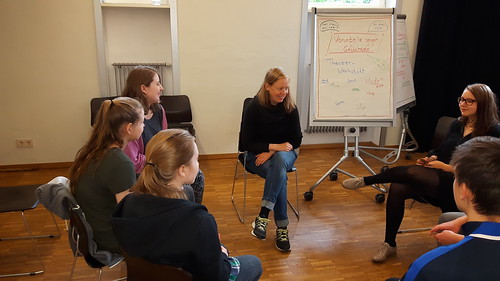
, 40 students from the Louise-Schroeder School at the wannseeFORUM, exploring various facets of the topic of immigration. During the week, the young people worked in five small artistic and media groups, each focusing on different aspects of the issue, and presented their findings in a joint presentation in the ballroom of Charlottenburg Town Hall.
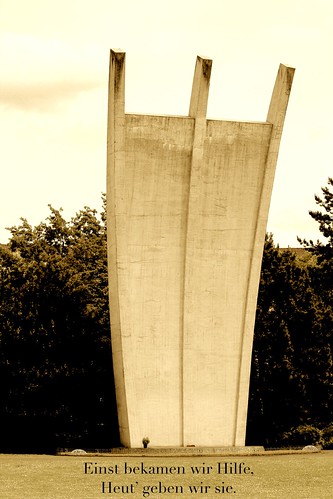
The photography group explored the concept of integration, comparing their own ideas with various integration concepts to critically examine common perspectives. The program also included a field trip to the emergency shelter in the former Tempelhof airport building. There, they had the opportunity to ask a doctor about the situation of the refugees and learned how the people there are being helped. They processed their impressions and discussion results into photographs , each chosen with a motto, which they then presented to the audience.
The audio group discussed at length the fears surrounding immigration within society and the origins of these anxieties. The role of the media was also critically examined. During an interview at the Contact and Counseling Center for Refugees and Migrants (KuB), the group learned about the legal situation of refugees in Germany. A visit to the emergency shelter on Wichertstraße provided an opportunity to speak with residents and a social worker . The group's clear conclusion : facts can help dispel prejudices. However, it is primarily direct interaction that helps reduce anxieties and foster mutual understanding.
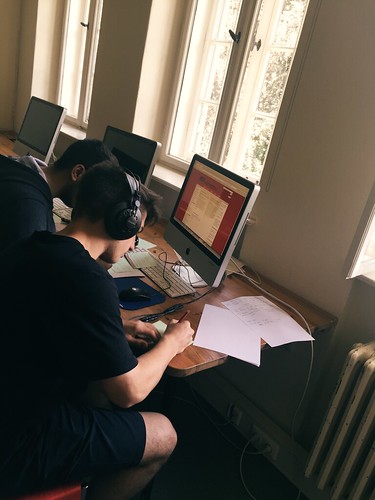
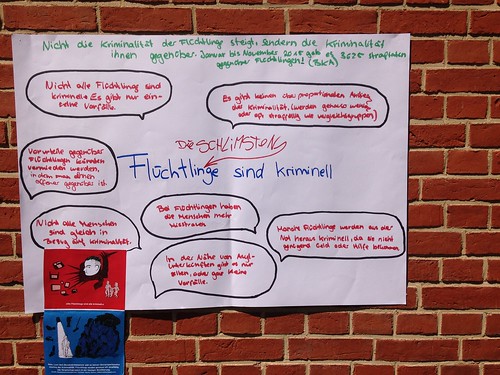
The theater group also addressed prejudices against refugees, linking this to a debate on racism and civic courage. Starting with their own biographies, they first visualized the diversity within their group using the concept of an identity molecule. They then critically examined why "the refugees" are often referred to as a homogenous group, to whom certain characteristics are then attributed. The group engaged in a lively discussion about when a statement becomes racist and how to take a stand against it. Three posters were created for this purpose. An activist (partly involved with Willkommen in Oranienburg & corasol ) with his own experience as a refugee was invited as a guest speaker. He was able to provide the students with insights into the living conditions and the significance of racism in the daily lives of refugees. A telephone conversation with a staff member from the Mobile Counseling Center Against Right-Wing Extremism (MBR) also addressed questions about the current threat level and possibilities for acting with civic courage. In their final presentation, the theater group performed two scenes: one featuring a panel of experts in which the right-wing populist theses of a participant were refuted. And a scene of discrimination at a market stall, where, in a second run-through, an intervention option was shown by the surrounding passers-by.
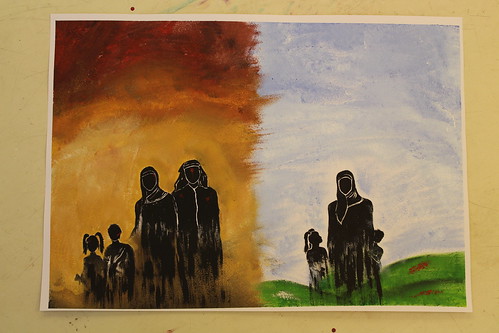
The drawing group explored the housing and care of refugees in Berlin. For example, they measured their own seminar room and compared it to the space available in an emergency shelter. They also compared the amount of money available to refugees with the participants' own expectations. An excursion took the group to the Wichertstraße emergency shelter, where a tour of the former gymnasium allowed them to gain firsthand insight into the living conditions. The students were deeply affected and criticized the cramped living conditions, but were simultaneously surprised by the openness and warmth of the residents and the high level of commitment shown by the staff. The refugees' stories, their paralyzing uncertainty about the future, the inadequate care, and the lack of privacy inspired their drawings, which they presented to the audience.
The rap group explored various forms and locations of protest by and for refugees. The focus was on rap lyrics and videos, which were analyzed to determine the messages they conveyed and how these messages were presented. This sparked diverse discussions about the background of the demands made within the videos. The lyrics, which the participants developed themselves during the seminar and performed in a collaborative song, address the arrival of a refugee, their reality in the country, and the reactions of the host society. The group also produced their own music video .
You are currently viewing placeholder content from Vimeo. To access the actual content, click the button below. Please note that this will involve sharing data with third parties.
The final presentation, to which the students and teachers of the Louise-Schroeder-School, as well as the district councilor for continuing education and culture, Dagmar König, and other guests were invited, took place on June 17, 2016, in the ballroom of Charlottenburg Town Hall. The presentation also marked the conclusion of the three-part seminar series "Flight and Migration" with the entire 11th grade of the Louise-Schroeder-School, and included results from the two preceding seminars, "History(ies) of Flight" and "Causes of Flight." The approximately 200 attendees were impressed by the students' presentations, and the district councilor stated that if such events were held more frequently, there would be no need to worry about integration in Germany. We also hope that the seminar has provided lasting impetus for shaping an inclusive society and thank all those involved.